I am reviewing this movie for Reading Ireland Month. It is hosted by Cathy at 746 Books. Please check out her page for more suggestions on reading, audiobooks, or music on her spotify list and use the hashtags #readingirelandmonth26 or #begorrathon.
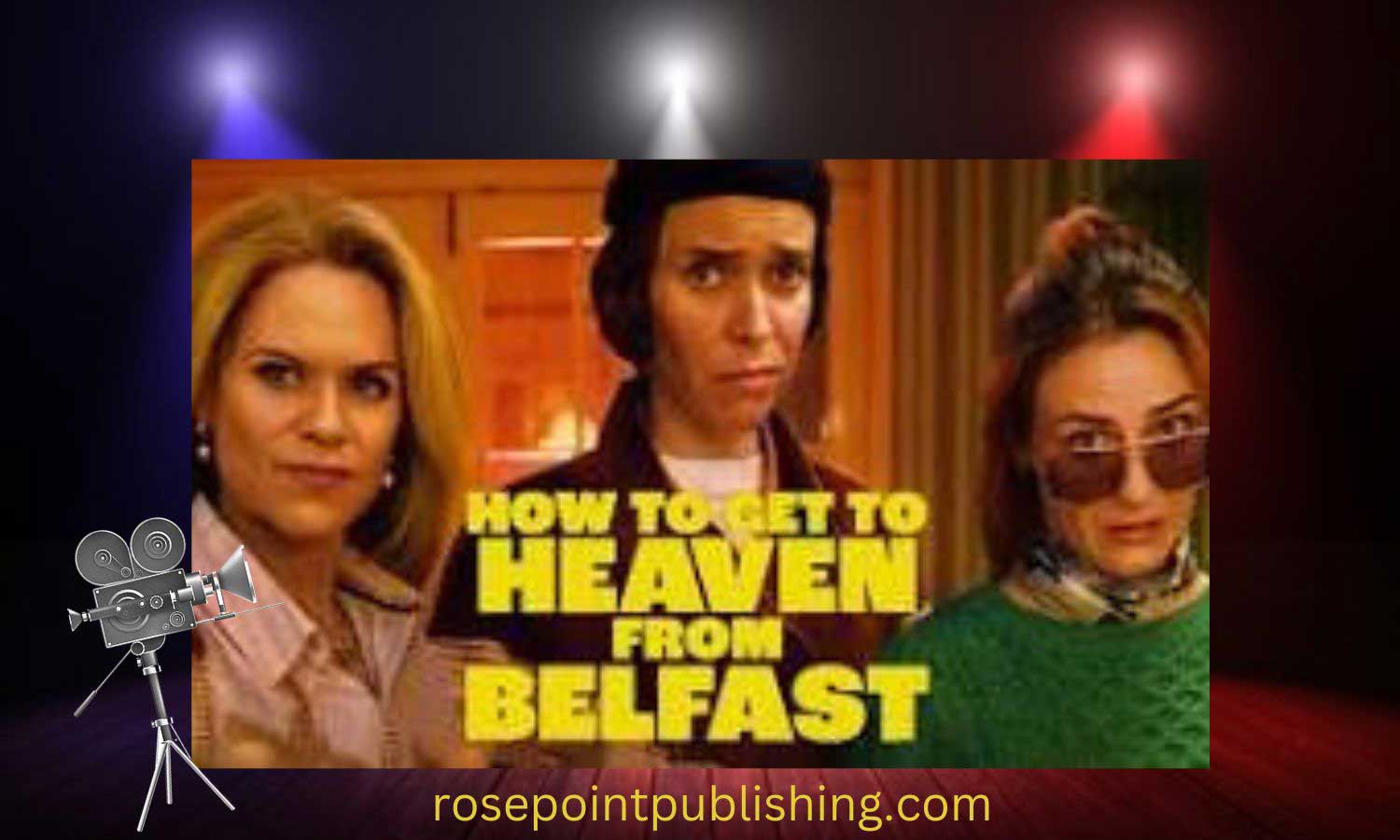
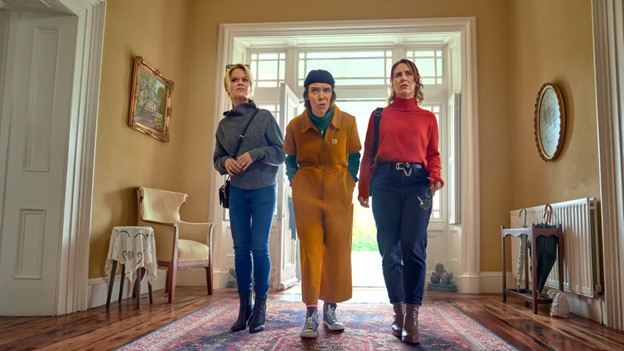
While this was billed as three lifelong friends reuniting after the death of an old classmate, I get the feeling that it was more like childhood friends than lifelong and having gone their separate ways are now more strangers than friends. At thirty-something, they no longer have anything in common except for the friend now deceased and the dreadful secret each has faithfully kept all this time. Together they set off for a wake that will take them across Ireland, during which they become fully reacquainted with each other again and gradually realize there was something really off about Greta’s mysterious death.
The series was created by Lisa McGee, who also created the Derry Girls, a series I started for this event and quickly stopped. A Hat Trick production, it was released in February of 2026 by Netflix and is currently available for streaming starring Roisin Gallagher as Saoirse, Sinéad Keenan as Robyn, and Caoilfhionn Dunne as Dara. Natasha O’Keeffe is starring as the elusive Greta.
The genre is set as a comedy and thriller, although I would also add dark comedy and satire.
Where in the world does the trip take them?
Well, we, who might not be terribly familiar with the scenic locations, get a lovely full tour. I believe it was shot primarily in Northern Ireland: Belfast, County Antrim, and County Down. Loved the rural views as well, the lush green countryside!
Photo courtesy Facebook
After the thrilling hook, the plot devolves into a wild free-for-all action flick with the three of them talking as fast as humanly possible and creating a small language barrier for those of us not familiar with the jargon, idioms, or expressions.
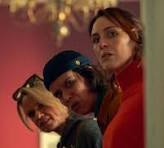
Part of my problem was keeping up with the different scenes, some seeming as if they were coming out of nowhere—wild party dances and freely flowing booze (how did we get here?), or a diminutive platinum blonde and pink hair dressed as a circus doll (?) with a voice to match that I think was worse than anything Dorothy could have dreamed up in the Wizard of Oz.
Photo from NPR and Christopher Barr from Netflix
There was a cop who would appear from time to time and cute as he was, couldn’t discern why or what his point was. There were a few appropriate flashbacks to get some backfill, and from time to time focused on one of the three separately to dig deeper into their personality. One had three kids, one was a successful TV show writer…what did the brunette do? Oh, yeah. And was that a statement as well? A blonde, a redhead, and a brunette? Clever.
The main characters were wildly different from each other and wielded a sarcastic, dry wit. There were confusing scenes meant to raise more questions than answers and intentional misdirection. Absolute chaos. Somewhere by episode 3 or 4, the hubby was gritting his teeth or trying to sleep. Still, that’s the same man who’ll watch a chick flick before I will. It’s just one of those…
Is this a cultural statement? Or feminist? Perhaps I’m not the right generation. I don’t know but watched all eight episodes and honestly can’t tell you if anything was settled or not. The characters are wild and a fascinating study (a McGee signature?). If that means there will be a season two, though, I’m not sure I’ll tune in. Will you? Have you watched it yet? All of it?
I was thrilled to learn that the book I was reading was also going to be a Netflix miniseries, so of course I had to stick around and view the screen adaptation of that powerful book. It’s always fun to compare the scenes with the visuals conjured from reading the narrative, putting the buildings, the location, and in this instance, the sea to reality.
The Netflix MiniSeries
Marie-Laure lives in Paris near the Museum of Natural History, where her father works. When she is twelve, the Nazis occupy Paris and father and daughter flee to the walled citadel of Saint-Malo, where Marie-Laure’s reclusive great uncle lives in a tall house by the sea. With them they carry what might be the museum’s most valuable and dangerous jewel. In a mining town in Germany, Werner Pfennig, an orphan, grows up with his younger sister, enchanted by a crude radio they find that brings them news and stories from places they have never seen or imagined. Werner becomes an expert at building and fixing these crucial new instruments and is enlisted to use his talent to track down the resistance. Deftly interweaving the lives of Marie-Laure and Werner, Doerr illuminates the ways, against all odds, people try to be good to one another.
My Thoughts
Sometimes when Netflix gets ahold of a popular, ground-breaking book, they manage to make hash of it. Not so this time.
While the novel is not based on a true story, it could so easily echo stories untold from WWII. Netflix managed to create such realistic scenes it was not uncommon to cringe or cry depending on the setting. The actors include newcomer Aria Mia Loberti and Louis Hofmann as well as Mark Ruffalo and Hugh Laurie. Apart from Ruffalo’s accent (now almost a running joke), all turned in remarkable performances.
Directed and executive produced by Canadian filmmaker Shawn Levy, it is described by Netflix as “an epic story of hope, love, and connection.” The story plays out in four parts inducing a binge watch.
Overall Impression
The scenes are explosive and brilliant, at times played against a peaceful sunrise or streetscape. War scenes or not, it’s a visual feast, often heart-pounding. Netflix smooths out the timelines a bit and creates a slightly more hopeful and palatable ending.
The eBook
Editors’ pick Best Literature & Fiction (Audiobook) #1 Best Seller in War Fiction Winner of the 2015 Audie Award for Fiction Goodreads Choice Award Winner for Best Historical Fiction 2014
Book Blurb
*NOW A NETFLIX LIMITED SERIES—from producer and director Shawn Levy (Stranger Things) starring Mark Ruffalo, Hugh Laurie, and newcomer Aria Mia Loberti*
Winner of the Pulitzer Prize and National Book Award finalist, the beloved instant New York Times bestseller and New York Times Book Review Top 10 Book about a blind French girl and a German boy whose paths collide in occupied France as both try to survive the devastation of World War II.
Marie-Laure lives with her father in Paris near the Museum of Natural History, where he works as the master of its thousands of locks. When she is six, Marie-Laure goes blind and her father builds a perfect miniature of their neighborhood so she can memorize it by touch and navigate her way home. When she is 12, the Nazis occupy Paris and father and daughter flee to the walled citadel of Saint-Malo, where Marie-Laure’s reclusive great-uncle lives in a tall house by the sea. With them they carry what might be the museum’s most valuable and dangerous jewel.
In a mining town in Germany, the orphan Werner grows up with his younger sister, enchanted by a crude radio they find. Werner becomes an expert at building and fixing these crucial new instruments, a talent that wins him a place at a brutal academy for Hitler Youth, then a special assignment to track the resistance. More and more aware of the human cost of his intelligence, Werner travels through the heart of the war and, finally, into Saint-Malo, where his story and Marie-Laure’s converge.
My Thoughts
I was lost to the book almost from the first page. The child, Marie-Laure, is going blind, and her thoughtful father finds a way to teach his daughter the streets of Paris. Picturesque, vibrant, breath-taking in the historic grandeur of the location, the buildings, the artsy atmosphere. But the tension is there. The world is changing. And so too, must Paris.
Beautiful writing style, emotional, powerful prose and it is the prose in the storytelling that drives the reader as well as the storyline and characters.
“If your same blood doesn’t run in the arms and legs of the person you’re next to, you can’t trust anything.”
The novel is set for the most part in Brittany, (St. Malo) France, however, and follows the plot line of the blind girl surviving in an ever-escalating Nazi environment. She spends a tremendous amount of time in hiding.
“A dozen pigeons roosting on the cathedral spire cataract down its length and wheel out over the sea.”
Werner Pfenning, a German orphan, discovers parts from a radio and curious, intelligent, and inventive manages to create a crude radio. That fascination grows into an expertise, one that he will use as an escape from being forced into the coal mines when he turns sixteen. Instead, he will be recruited into the Hitler youth using his proficiency with radios to find those in the French resistance sending communications. It will define his life but the results of his success wear on him.
A third thread—that of a German officer Von Rumpel rabid to find a stone worth “three Eiffel Towers” and said to have magical powers is the driving force in his collection of valuables from those the Germans occupy. The girl’s father who worked at the National History Museum where it was said to be housed may be in possession of that stone and von Rumpel will stop at nothing. When they fled Paris for St Malo—did he take it with him?
“You know the greatest lesson of history? It’s that history is whatever the victors say it is. That’s the lesson. Whoever wins, that’s who decides the history. We act in our own self-interest.”
The two and then the three are bound to collide. The author throughout has pulled no punches; it’s a war. There are shocking moments, the worse coming in the conclusion. My heart broke.
Nooo!…I’m still naively looking for the happy ever after.
The Author
Anthony Doerr has won numerous prizes for his fiction, including the Pulitzer Prize and the Carnegie Medal. His novel, ‘All the Light We Cannot See,’ was a #1 New York Times Bestseller and his new novel, ‘Cloud Cuckoo Land,’ published in September of 2021, was a finalist for the National Book Award. Learn more at http://www.anthonydoerr.com.
Book Details
Genre: War Fiction, Military Historical Fiction Publisher: Scribner (Reprint edition May 2014) ISBN: B084TPDQRR ASIN: B00DPM7TIG Print Length: 552 pages Publication Date: May 6, 2014 Source: Local Library Title Link: All the Light We Cannot See [Amazon-US] Amazon-UK
Overall Impression
There is considerable discussion over the plot being divided between three POVs as well as the jump in timelines. It is disconcerting at first. But then the rhythm of the narrative begins a familiar pattern that actually draws the scenes together, and completes a total picture. The book is so compelling, the characters so well developed that there is considerable sympathy for the condition of the time and engagement with each child—caught in a circumstance neither can control–only attempt to survive. It’s suspenseful, hair-raising, alternately sad and triumphant in small victories. Von Rumpel provides the perfect foil, the antagonist easy to hate.
I absolutely loved the book and breezed through it as if it were a novella. I understood at some point reality would take a big bite, but it was still crushing nonetheless. Dramatic irony: The idea that we know what’s coming but are still unable to look away.
Conclusion
The book is a Pulitzer Prize-winning novel full of prose, beautifully written. It’s a lengthy read but one you won’t want to put down. It’s easy to become invested in the two main characters, one controlled by a disease that renders her blind in a treacherous and dangerous time in France. The other is an orphan using only his wits with a radio to keep him from following in his father’s deadly steps deep into a coal mine. The sub-plot adds a suspenseful line to the well-plotted and paced book but is hampered somewhat by introducing several POVs and non-chronological timelines. It’s easy, however, to be completely absorbed by mind-blowing prose.
The Netflix miniseries cinematography is stunning, the actors do an amazing job pulling at your heart and selling their roles. The leading actress, Aria Mia Loberti is legally blind. (She turned in a masterful inaugural performance in this series and we watched mesmerized. The series might be worth watching simply for her compelling presence.)
True, Netflix puts a softer Hallmark spin on the original novel, softening some of the blows and smoothing out an often confusing timeline switch. It crafts a beautifully compelling tale of the young caught in a conflict they may not survive only briefly experiencing what possibilities life might have held for them.
The book may be a challenge given the length and you’ll get a condensed Reader’s Digest version if you choose the series. Perhaps you are a reader, like myself, who enjoys seeing/reading and comparing the two. Either way, you can’t go wrong and please let me know which you choose.
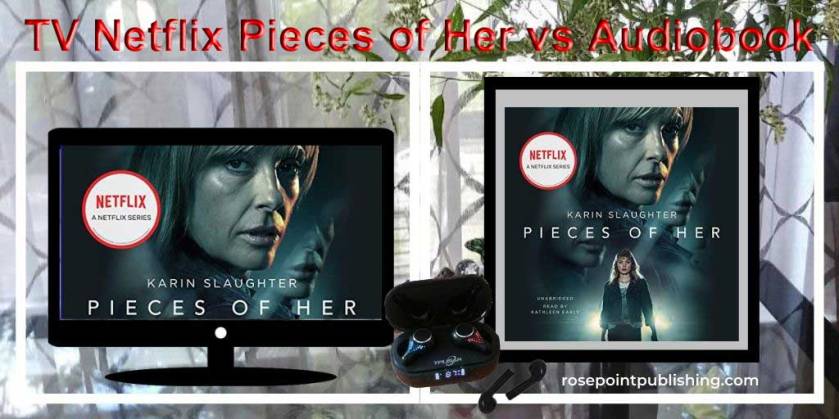
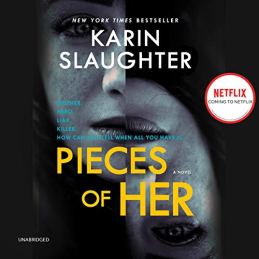
TV Netflix Series Pieces of Her vs Audiobook Pieces of Her by Karin Slaughter
Best Mystery, Thriller & Suspense
Intro
After having listened to the audiobook that I then learned would be a Netflix original, I patiently waited for this one to debut, which it did on Friday, March 4. Again, I’m flummoxed by the difference between the original story and the Netflix series.
So if it’s well-received as a book title or audiobook, did it also translate well to the small screen? If you’ve caught a few of my previous audiobooks versus Netflix series, you’ll note my continued bewilderment. Is this actually better? Or worse. A radical departure from the Virgin River while a faithful reproduction of Longmire. (And I really loved the characters on Longmire.)
As you’ve no doubt read or heard by now, Pieces of Her is the story of a daughter who is just discovering that her mother hasn’t always been the person she thought was her mom.
Pieces of Her the Netflix thriller was developed by Charlotte Stoudt and Lesli Linka Glatter. The director for all episodes (and there are eight in the first series) is Minkie Spiro who directed Downton Abbey and Better Call Saul and while I’ve not watched the former, a solid fan of the latter, so I was excited.
Netflix Series
Pieces of Her (in the co?) leading role is Toni Collette as Laura Oliver with Bella Heathcote as Andy Oliver (her daughter). There are a number of other actors, of course, my favorites being Omari Hardwick as Gordon Oliver and Gil Birmingham as Charlie Bass. There is a lineup of actors portraying Laura as a child and as an adolescent.
The series is adapted from the novel (same name) by Karin Slaughter who is also acting as a producer on the show.
Andy (Andrea) is celebrating a 30s birthday out with her mother, Laura, in beautiful coastal Belle Isle when the quiet serene atmosphere suddenly turns tragic. While Andy freezes in horror, Laura springs to action in the protection of her daughter and is soon forced to make a deadly decision.
That split-second automatic reaction to the situation changes their lives immediately and forever.
Laura is hurt but following triage medical attention clams up and refuses to speak to anyone; not to the police, her ex (Gordan), or to Andy. To Andy, however, she barks quick instructions to speak to no one and leave. She is handed some money, a burner phone, and car keys but no explanation. YAY! So far, so good.
Well, but Andy hasn’t been doing so well with her life though; aimless, living off her mother’s generosity in her mother’s garage apartment. So I’m not sure how she can be trusted to follow the instructions.
And she doesn’t.
My Thoughts
But now, is it just me? Or did the Netflix version veer into it’s own interpretation? The constant flashbacks crippled somewhat the timeline from Laura’s childhood to the present situation, introduction of all the backstories, new characters and twists that spins wildly with 70s US history. Indeed, at times spun completely out of coherence, forcing the viewer to catch up and make connections in later scenes.
While Toni Collette (Laura) made a heroic effort at portraying a horrific history and her effort at escape, her wretched persona got a bit tiresome. Andy, what can I say about poor, dear Andy; not the brightest daughter ever to be delivered from a pseudo-protest child.
3 stars
Audiobook (Blurb)
The number-one international best-selling author returns with an electrifying novel of devastating secrets and hidden lives that probes the fraught relationship between daughters and mothers and the lengths we go to protect those we love.
What if the person you thought you knew best turns out to be someone you never knew at all? Andrea Cooper knows everything about her mother, Laura. She knows Laura has spent nearly her whole life in the small beach town of Belle Isle, Georgia; she knows Laura’s never wanted anything more than to lead a quiet, normal life in this conventional community; she knows Laura’s a kind and beloved speech pathologist who helps others; she knows Laura’s never kept a secret in her life. Andrea knows that Laura is everything she isn’t – confident, settled, sure of herself. Feeling listless, with no direction, Andrea, unlike Laura, struggles to find her way.
But Andrea’s certainty is upended when a visit to the mall is shattered by an act of horrifying violence that reveals a completely different side of Laura – a cool woman who calmly faces down a murderer. It turns out that before Andrea’s mother was Laura, she was someone completely different. For nearly 30 years she’s been hiding from the woman she once was, lying low in the hope that no one would ever find her. But now she’s been exposed, and nothing will ever be the same again.
The assailant was a mentally troubled, teenaged scion of Georgia law enforcement royalty, and now the police want answers about what really happened in those terrifying moments at the mall. Though she’s being scrutinized at every level of the criminal justice system and her innocence is on the line, Laura refuses to speak to anyone, including her own daughter. She pushes Andrea away, insisting it’s time for her to stand alone and make a life for herself. To save her mother, Andrea embarks on a desperate journey following the breadcrumb trail of her mother’s past. Andrea knows that if she can’t uncover the secrets hidden there, there may be no future for her mother…or her.
Filled with intriguing turns, surprising revelations, and a compelling cast of characters, Pieces of Her is Slaughter’s most electrifying, provocative, and suspenseful novel yet.
My Thoughts
Okay, by now the well-plotted storyline has been laid out more than once. When Andy witnesses her mother in action, she is both stunned by her actions and also suffering from the disastrous circumstances that forced her mother’s reaction. She is not capable of applying what she knows about her mother with the person who so deftly ended the appalling scene. It’s shocking.
I was hooked by those opening scenes, narrated well by Kathleen Early. I quickly compared many of the headlines of the 70s to the circumstances dibbled out in little dabs, building the tension and whipping the listener from mother to daughter. As the old saying goes, make no conclusions until all the facts are disclosed, but mercy, that could be sooo slow sometimes.
Mainly told in Andy’s POV, there are the backstories, flashbacks revealing another tiny morsel of truth. Or was it the truth? Who can you trust?
The truth, the reveal, when it finally came, came as a knowing relief and combined several theories in the complex plot meant to throw the reader/listener off.
The setting is beautiful, the characters’ depths varied, most not wholly sympathic, the dialogue often blue. I listened to False Witness last year, my introduction to the author and her graphic writing style, but had to try one more. Perhaps I’ll try one in her signature series next time, rather than a standalone thriller.
4 stars
Overall Impression
While I enjoyed the book, the tension, drama, and thrill of discovery, there were times when I lost all faith in Andy, finding her making questionable decisions more than once. I had too early formed an opinion of the circumstances, having lived through those years and headlines, and was shocked at the jaw-dropping reveal when it came. Still, I questioned some of Laura’s early handling of Andy and wondered how that might have been better.
The Netflix series, usually following their well-received formula, took a slightly different tack this time, throwing in Andy’s quick romantic interest (not unusual), but making a hash of the flashbacks. They generally work to create an equitable R-rated series, but missed building the tension this time like the book did.
This time my vote has to go to the author’s book—and it’s been out for some time–and can be found at your favorite retail outlet.
Book Details
Genre: Women Sleuth Mysteries, Police Procedural Mysteries Publisher: Blackstone Audio, Inc. ASIN: B07CLKPDWL Listening Length: 16 hrs 5 mins Narrator: Kathleen Early Audible Release: August 21, 2018 Source: Local Library (Audiobook Selections) Title Link:Pieces of Her [Amazon]
The Author:Karin Slaughter is one of the world’s most popular and acclaimed storytellers. Published in 120 countries with more than 35 million copies sold across the globe, her 21 novels include the Grant County and Will Trent books, as well as the Edgar-nominated COP TOWN and the instant NYT bestselling stand-alone novels PRETTY GIRLS, THE GOOD DAUGHTER, and PIECES OF HER. Slaughter is the founder of the Save the Libraries project—a nonprofit organization established to support libraries and library programming. A native of Georgia, she lives in Atlanta. Her stand-alone novel PIECES OF HER is in development with Netflix, starring Toni Collette, and the Grant County and Will Trent series are in development for television.
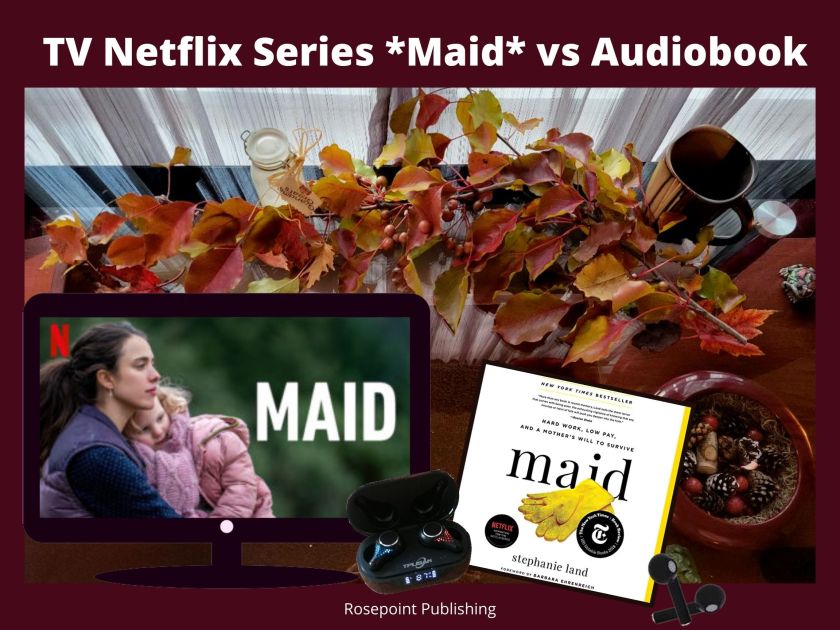
Another Netflix original that I noticed had been adapted from a popular book by a debut author. As you know, I am loving the challenge of listening to the audiobook to see how much (or little) Netflix changed and made it their own. Did they make it better? Worse? And as also mentioned before, I noticed a radical departure from some of the original books (although not quite so much with Longmire, but thankfully for the Virgin River series).
The storyline by Stephanie Land chronicles her experiences of taking on approximately 25 hrs work a week as a maid (I would call her a housekeeper—not really a maid)—who is trying to care for her toddler daughter and take classes toward a degree. She writes in detail of her struggles with a broken welfare system (Washington state), assistance, that sometimes takes days of time to complete applications, numerous trips to the separate agencies, and then suffer through wait times of months, even years for relief.
Netflix Series
Alex–played by Sarah Qualley – Attribute Wikipedia
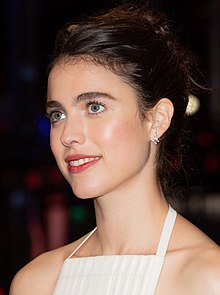
Alex is a single mother with daughter Maddy who has escaped the child’s abusive father and homelessness to perform housecleaning duties for clients of a cleaning service where she is paid minimum wage. The series began on October 1, 2021 and was written by both Stephanie Land and Molly Smith Metzler. At 5/8”, the 27 year old Sarah Margaret Qualley (who plays Alex in the title role) was born in Kalispell, MT to parents Andie MacDowell (who also appears as her mother) and Paul Qualley.
Maddy–played by Rylea Nevaeh Whittet – Attribute-imdb.com
Billed as a limited series, Season 1 of Maid has ten episodes. I say Season 1 as it has been holding the Top 10 spot since the premiere. Since the season ended with a solid (happy) conclusion, there is debate regarding a continuing story. Maddy, the sweet cherub-faced toddler is adorable and steals any of her scenes (I think anyway).
There are additional support characters (but the POV is all Alex)—the father—not the most supportive of dads, and the storyline zooms in on the various houses where she is assigned to clean, their stories, houses, and the relationship (or lack thereof) to their housecleaner.
My Thoughts
This one starts out fairly slow building (after the initial fleeing in the night scene) the whos, whys, whats, whens, and wheres. Episode 1. Episode 2 begins building on the stories of the homes—who they are. Some are fleshed more than others depending on their involvement with Alex, many of whom have none at all. She names each of the houses—“the sad house,” “the porn house,” etc.
The story continues to build conflict with her ex—Sean—who is getting progressively violent. Conflict escalates with each new financial burden—carefully calculated on screen showing deductions into deficit. Her mother’s character is an aging hippie, alternately a helpful grandmother or not. I really like the fictional additions—the stories of some of the housecleaning homes, but there are holes in the series. I believe she is getting child support, but it doesn’t appear in the financials—only that of her earnings(?).
She is over the moon with her daughter and seldom (maybe once in ten episodes) gets tired or cross with her. I understand the overwhelming exhaustion—and times when she needed a break. And she does, from time to time get those. She has a pessimistic attitude, facing one crisis after another, not always making the wise decision. She tends to snoop when opportunity presents itself, trying on clothes while decrying the small pilfering by a co-worker.
I was the daughter of a mother left with two children, no education or working experience. I can remember the struggles, the panic, and the admonition that we could “NOT get sick this winter” (we wouldn’t dare!), wherever that was going to be. She never had a break, nor did we have any kind of child support. There were days she simply ironed—for eight hours (and any income is deducted from welfare).
Sometimes Alex just doesn’t feel authentic.
Audiobook (Blurb)
At 28, Stephanie Land’s plans of breaking free from the roots of her hometown in the Pacific Northwest to chase her dreams of attending a university and becoming a writer, were cut short when a summer fling turned into an unexpected pregnancy. She turned to housekeeping to make ends meet, and with a tenacious grip on her dream to provide her daughter the very best life possible, Stephanie worked days and took classes online to earn a college degree, and began to write relentlessly.
Maid explores the underbelly of upper-middle class America and the reality of what it’s like to be in service to them. “I’d become a nameless ghost,” Stephanie writes about her relationship with her clients, many of whom do not know her from any other cleaner, but who she learns plenty about. As she begins to discover more about her clients’ lives-their sadness and love, too-she begins to find hope in her own path.
Her writing as a journalist gives voice to the “servant” worker, and those pursuing the American Dream from below the poverty line. Maid is Stephanie’s story, but it’s not her alone.
My Thoughts
Ms. Land wasn’t a teenager when she split from her ex. Nor at 28 (29?) did she seem to have an education she could apply to any available job, falling back on housekeeping as a way to spend time with her daughter. But at 25 hrs a week housekeeping, she was below the poverty line which left her with mounds of applications for aid, the embarrassment of food stamps, the doctors who only see the “Medicaid” patient, the WIC quandary. The failure of the system, heaven knows, is rather massive in any state, but Stephanie is detailing the failures, one at a time, over and over.
The more griping and negativity I heard, the greater my exhaustion of hearing about her victimization. She seems openly envious of anyone with more than she, perhaps not considering what it took to get them there. She may have tried on their shoes, but she didn’t walk in them.
Overall Impression
Okay, I’m scratching my head over this one. Clearly, I did not care for the audiobook, read by the author or not. I could not engage, work up the sympathy. SOOO many thousands of women going through the same and they may, as my mother did, cry in their pillows at night, but they carried on without pointing fingers at everyone else.
Netflix, as they usually do, found a strong middle ground, showing both the failures and the successes, building empathy where due, focusing on the child, lifelines for abused women, groups, and helplines. Conflicts and resolution. Light at the end of the tunnel only to have the light smashed and the tunnel black again. The storyline moves, however gradually, in an upwardly mobile direction.
I don’t think Netflix softened or frosted over the critical situation of the women. But they did provide just that sliver of hope that the tide will turn. And indeed it does. I’d recommended the Netflix version, but certainly cannot the audiobook and by that extension the book as well.
Book Details
Full Title: Maid: Hard Work, Low Pay, and a Mother’s Will to Survive Genre: Poverty & Homelessness Studies, Government Social Policy, Social Public Policy Publisher: Hachette Audio ASIN: B07MNHMYCP Listening Length: 8 hrs 34 mins Narrator: Stephanie Land Audible Release: January 22, 2019 Source: Local Library (Audiobook Selections) Title Link(s): Maid [Amazon] Barnes & Noble Kobo
The Author:Stephanie Land is the instant bestselling author of “MAID: Hard Work, Low Pay, and a Mother’s Will to Survive.” Her work has been featured in The New York Times, The Washington Post, The Guardian, The Atlantic, and many other outlets. Her writing focuses on social and economic justice. Follow everywhere @stepville or stepville.com [Goodreads]
“This romantic odyssey earned three Golden Globe nods and won “Most Bingeworthy Show” at the Critics’ Choice TV Awards.”
Once again, trust the CE to find a series we carefully parceled out (depending on the last episode watched) to make this series last longer and still burned through it quickly. I never was really able to see the sparks between Jamie and Claire (always viewing her as so much more mature than he), but the stories were riveting and kept us glued. Those who have followed me for some time know I’m not a big fan of romance—but these stories—getting past the romance part—put you back in time, the beauty and barbarism, the daily struggle of life. And I do so enjoy that historical aspect.
Netflix Series
Currently, there are five seasons (67 episodes) on Netflix. Season six possibly May of 2022 and strong hope of a seventh season—some time. It was developed by Ronald D Moore.
It’s a historical drama, so you know it got my attention. Basically, a married WWII nurse is transported back to 1743 during the Jacobite rising. There she meets Jamie Fraser, a Highland warrior. But Jamie is just the start of a roster of stellar characters, manly men in kilts. They set the scene of the people, the time, the country, and their fierce loyalty to the clan they belong. First the clan—then the country—and they have a common enemy, the English.
There are eight books in the Outlander series with Outlander: Book 1, kicking it off. Many of the seasons storylines can be traced directly back to the original books:
Outlander
Dragonfly in Amber
Voyager
The Drums of Autumn
The Fiery Cross
A Breath of Snow and Ashes
An Echo in the Bone\Written in My Own Heart’s Blood
I listened to Audiobook 1 in its entirety and then couldn’t find either Book 2 or 3 and started Audiobook 4, The Drums of Autumn. Within Season 1 are sixteen episodes.
The male lead, Sam Roland Heughan was born April 30, 1980 in Balmaclellan, Dumfries and Galloway, Scotland. He’s 6’2” and owns that Highlander part right now to his tricorn. He is a co-founder of My Peak Challenge, a charitable community-based organization.
The female lead, Caitriona Balfe was born in Dublin, Ireland and grew up in County Monaghan. She worked as a model (she is 5’9”) and was studying drama at the Dublin Institute of Technology hoping to become an actress when she was scouted.
My Thoughts
I absolutely loved the swoon-worthy Jamie and still not sure Claire “fits” him, although looking at Hepburn and Bogie you’d not think they’d fit any better. I feel she’s a little light on chemistry, but, hey, that’s just me. Otherwise, these storylines move so fast, appear so authentic you’d swear you took that stone journey right along with Claire, a delightful fantasy in itself. I appreciate the inclusion of the Scottish Gaelic, the speech patterns, from sassenach to bhalaich and glimpses of the countryside. It’s a series that bombards the senses with sight and sound and teleports the imagination. Escapism when we truly needed it. 5 stars
Audiobook
This stunning blend of historical romance and time traveling adventure has captured the hearts of millions of readers around the world and catapulted author Diana Gabaldon to the top of the New York Times best seller list. Outlander introduces an exhilarating world of heroism and breathtaking thrills as one woman is torn between past and present, passion and love.
In 1945, former combat nurse Claire Randall returns from World War II and joins her husband for a second honeymoon. Their blissful reunion is shattered when she touches a boulder in an ancient stone ruin and is instantly transported to 1743 Scotland, a place torn by war and raiding border clans. Will Claire find her way back to her own time, or is her destiny forever linked with Clan MacKenzie and the gallant James Fraser?
My Thoughts
Oh, ouch! Here I go again! Watched a G-rated Netflix series thinking I’d get the same rating from the audiobook. Nope. Reminds me a great deal of the experience I had with another well received and popular Netflix series only to find out that the author wrote a sexually laden series—not the toned down small town fiction series we got on the home screen.
While much of the action-adventure, spirit of the eighteenth century works a strong background, the romance between the two main characters take front and center stage, sometimes getting more graphic than I’m comfortable with. Claire, not a nurse but a practiced surgeon, falls for a warring Highlander with little romantic experience. She becomes the teacher.
Otherwise, it would appear most of the support characters echo those presented in the TV version with various degrees of debauchery. Claire becomes a strong presence among the men, owing to her medical prowess, while still clinging to the secret of having been plunked into their midst from another time. Wincing narrative scenes are easier to read (or listen to) than broadcast in full sight to a general audience? Torn between 3 ½ and 4 stars, perhaps I’ll settle at 3 ¾ stars.
Overall Impression
Hazzah to those who created and went with a romantic time-travel adventure! More about the people, the time, the culture than the two love interests. I loved the costumes, the authentic touches of the Netflix series and the plot that continually builds into another period journey and I didn’t have to hide my eyes or block my ears once. This is one VERY long series and in either printed or audiobook form may constitute an epoch undertaking. I found my own quota after completing Book 1 and sampling Book 4. Probably no different for those who follow long running series well into the double digits. Some never get old and some just wear you out. I’ll happily watch another season on Netflix, but think I’ll move on to other audiobooks now.
Book Details
Outlander: Book 1
Genre: Time Travel Romances, Scottish Historical Romance, Historical Fantasy Publisher: Recorded Books ASIN: B000GW8NVA Listening Length: 32 hrs and 38 mins Narrator: Davina Porter Audible Release: July 13, 2006 Source: Local Library (Audiobook Selections) Title Link: Outlander: Book 1 [Amazon]
Photo by Gage Skidmore
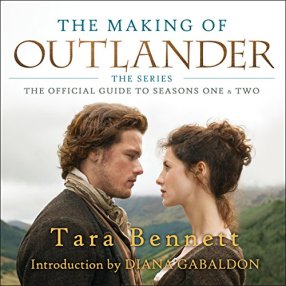
The Author:Diana Gabaldon is the internationally bestselling author of many historical novels including Cross Stitch, Dragonfly in Amber, Voyager, Drums of Autumn, The Fiery Cross and A Breath of Snow Ashes. She lives with her family in Scottsdale, Arizona. She is a New York Time bestselling author.
The Narrator: Golden Voice narrator Davina Porter has performed not only the entire Outlander series by Diana Gabaldon, but also other fantasy classics including many of Marion Zimmer Bradley Avalon audiobooks, and Erika Johansen’s widely praised THE INVASION OF THE TEARLING. Davina’s audiobook work includes titles ranging from classics to mystery to philosophy, with an enduring thread of splendid fantasy audiobooks.
“I was born and raised in England, my father was English, a true “Londoner” (read Cockney!), and my mother was born in St. Andrews, Scotland. Two accents under my belt! I am married to a Glasgow-born Scot, more diversity. Being a product of my background, I am very familiar with the English and Scottish way of life, and all its foibles!”
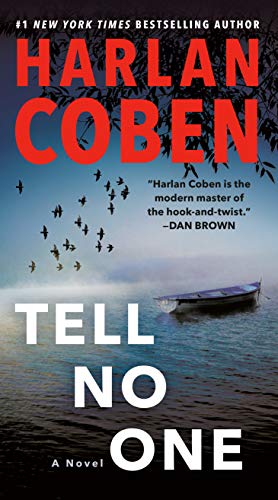
Critically acclaimed, best-selling author Harlan Coben has won the Shamus, Anthony, and Edgar Awards during his impressive career.
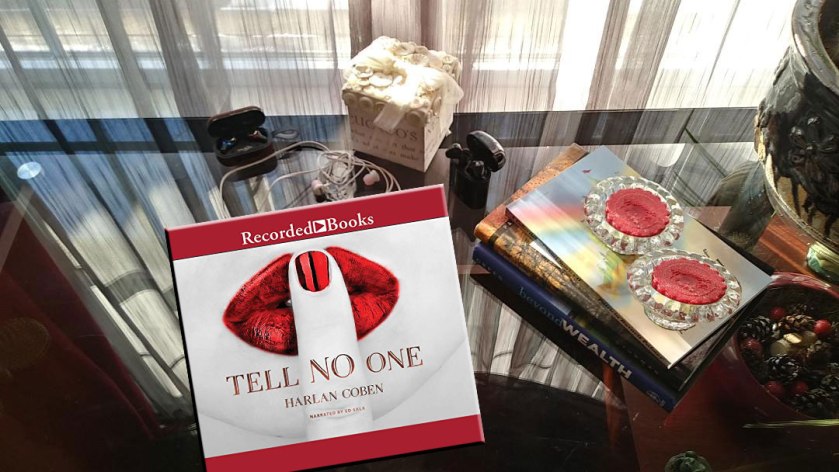
Tell No One is an irresistibly suspenseful thriller infused with nail-biting tension and packed with shocking plot twists. It has been eight years since Dr. David Beck’s wife, Elizabeth, was murdered by a serial killer. When Beck receives a message containing a phrase only Elizabeth should know, he is tormented to tears. Either someone is playing a sick joke, or the wife he’s never stopped loving is still alive. He’s been warned to tell no one, and as the desperation of his search for the truth intensifies, he heads straight toward a deadly secret.
Coben tempers the drama with dashes of sly humor and a cast of unforgettable characters, including a bare-hands assassin, a glamorous plus-size model and a drug dealer with a soft spot for Dr. Beck. Listeners will relish Ed Sala’s exhilarating narration.
My Review:
No, I hadn’t read everything the author has turned out and sure if I did it was years ago—before I started reviewing—but thumbing through the Netflix offerings came across The Stranger his ebook originally published in 2015. Admittedly, I couldn’t find the audiobook in my local well-stocked library, but here was Tell No One (originally published in 2009) and I must say—close enough. There’s a mild case of déjà vu lurking there.
Okay, yes, there is quite the hook and the premise gets you to reading. The novel is fast-paced and the prose engaging. I couldn’t quite get into any of the characters—main (i.e. Dr. David Beck) or the support characters who were all over the place from medical colleagues to partner of his sister to the street thug who rescues him. I must admit, however, to rooting for the street thug to split—while he had the chance.
I don’t know. What was I expecting?
The narrative gets to spinning when Dr. Beck receives an email that almost convinces him that the wife he thought he’d lost eight years ago is still alive. No, he’d never found a replacement, isn’t married, still pining over the soul mate with whom he’d carved momentous occasions on a pine tree. Also, nature being what it is, has unearthed two bodies at the site where the kidnapping and his attack took place and a whole new scenario opens. Hmmm…
Coben heaps it on, adding twists, adding bits of clues concealed as info, adding more characters, explosive scenes, and enough tender scenes between he and Elizabeth that even the most romance addicted YA would begin to gag. There are more questions, but suddenly Beck himself appears to be a POI in his wife’s kidnapping and death. Wait.Is she really dead?
He’s on the lam and amazingly with the help of his street thug buddy evades the dragnet. Oh, I’m telling you, this will get quite a bit more complex and convoluted, stretching into disbelieving territory before it all winds up in conclusion. Even then, this is a tough act to sell and I’m not wholly buying. Yes, lots of suspense building and at this point I was just curious to see how the author was going to pull it all together, but then he didn’t. Not for me. I was kinda bummed.
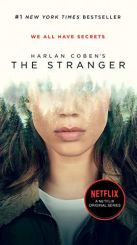
So, now let’s see—The Stranger (Netflix series) has the same kind of harried husband, discovers a devastating secret about his wife, wife disappears; unlikable, unrelatable main and support characters. Unfathomable conclusion leaves you somewhat flat. What? is written across your forehead. Maybe just mine, but I downloaded the ebook and I’ll report back.
Book Details:
Genre: Mysteries, Suspense Thrillers, Kidnapping Thrillers, Serial Killer Thrillers, Murder Thrillers Publisher: Recorded Books Print Length: 396 pages ASIN: B002SXIF4A Listening Length: 10 hrs 36 mins
ASIN: B0078IX10I Narrator: Ed Sala Audible Release Date: February 13, 2012 Source: Local Library (Audiobook Selections) Title Link: Tell No One [Amazon]
Rosepoint Publishing: Four of Five Stars
The Author: With over 70 million books in print worldwide, Harlan Coben is the #1 New York Times author of thirty one novels including RUN AWAY, FOOL ME ONCE, TELL NO ONE, NO SECOND CHANCE and the renowned Myron Bolitar series. His books are published in 43 languages around the globe.
Harlan is the creator and executive producer for the Netflix television dramas SAFE starring Michael C. Hall, Audrey Fleurot and Amanda Abbington, and THE FIVE starring Tom Cullen and OT Fagbenle. He is currently filming THE STRANGER, based on his novel, for Netflix starring Richard Armitage, Siobhan Finneran, Jennifer Saunders and Stephen Rea. Harlan was also showrunner and executive producer for two French TV mini-series, UNE CHANCE DE TROP (NO SECOND CHANCE) with Alexandra Lamy and JUST UN REGARD (JUST ONE LOOK) with Virginie Ledoyen. KEINE ZWEIT CHANCE, also based on Harlan’s novel, aired in Germany on Sat1.
Harlan’s novel TELL NO ONE (NE LE DIS A PERSONNE) was turned into the renowned French film, directed by Guillaume Canet and starring Francois Cluzet. The movie was the top box office foreign-language film of the year in USA, won the Lumiere (French Golden Globe) for best picture and was nominated for nine Cesars (French Oscar) and won four, including best actor, best director and best music. The movie with subtitles is now available on Netflix, Amazon Prime and DVD/Blu-Ray.
Winner of the Edgar Award, Shamus Award and Anthony Award – the first author to win all three – international bestselling author Harlan Coben’s critically-acclaimed novels have been called “ingenious” (New York Times), “poignant and insightful” (Los Angeles Times), “consistently entertaining” (Houston Chronicle), “superb” (Chicago Tribune) and “must reading” (Philadelphia Inquirer).
In his first books, Coben immersed himself in the exploits of sports agent Myron Bolitar. Critics loved the series, saying, “You race to turn pages…both suspenseful and often surprisingly funny” (People). After seven books Coben wanted to try something different. “I came up with a great idea that simply would not work for Myron,” says Coben. The result was the critically acclaimed New York Times bestseller TELL NO ONE, which became the most decorated thriller of the year. Two books later, Bookspan, recognizing Coben’s broad international appeal, named NO SECOND CHANCE its first ever International Book of the Month in 2003 – the Main Selection in 15 different countries.
Harlan was the first writer in more than a decade to be invited to write fiction for the NEW YORK TIMES op-ed page. His Father’s Day short story, THE KEY TO MY FATHER, appeared June 15, 2003. His essays and columns have appeared in many top publications including the New York Times, Parade Magazine and Bloomberg Views.
Harlan has received an eclectic variety of honors from all over the world. In Paris, he was awarded the prestigious Vermeil Medal of Honor for contributions to culture and society by the Mayor of Paris. He was won the El Premio del Novela Negra RBA in Spain, the Grand Prix de Lectrices in France, and the CWA/ITV3 Bestseller Dagger for favorite crime novelist in England. On the other end of the spectrum, Little League Baseball inducted Harlan into their Hall of Excellence in 2013, and Harlan is also a member of the New England Basketball Hall of Fame from his playing days at Amherst College.
Harlan was born in Newark, New Jersey. He still lives in New Jersey with his wife, Anne Armstrong-Coben MD, a pediatrician, and their four children.
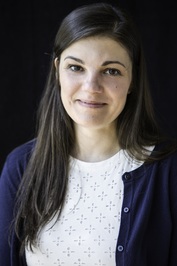
The Narrator:Ed Sala received a master’s degree in playwriting from Virginia Commonwealth University in Richmond, Va. He’s lived his life primarily as an actor, appearing on and off Broadway, at Carnegie Hall and in movies and episodic television. His plays have been produced from New York City to Melbourne, Australia. He considers himself very lucky to live a life in this business.
The reason you should never say never is that you’ll invariably end up doing it.
You can usually tell (sight unseen) a Hallmark production by the music and the fairytale romance following. I’m not the Hallmark movies watcher in this family—it’s the CE—and Netflix knows his Hallmark proclivity from the stats that apparently note his selections pretty closely. But this one caught my attention, too, and we’ve been binge-watching again. When I saw that it was originally a Canadian author’s western historical series, I had to go looking for it at my local library to see what they had. They had one audiobook (!!) as well as a number of ebooks and you know I will choose the audiobook. What I discovered was a TV Netflix series loosely based on a bestselling series originally written by author Janette Oke as western religious fiction.
When Calls the Heart Netflix Series
When Calls the Heart is a Canadian-American television drama series, one of many we’ve watched and enjoyed lately. It was inspired by Janette Oke’s book from her Canadian West series. Developed by Michael Landon Jr, the series began on the Hallmark Channel in the US on January 11, 2014.
Elizabeth Thatcher (Erin Krakow) is a young teacher from a wealthy family anxious to follow the calling of her heart to teach. She finds herself in a classroom in Coal Valley, a coal-mining town in Western Canada.
The life is tough enough without the mine disaster that kills Abigail Stanton’s (Lori Loughlin) husband and her only son, along with 45 other miners in an explosion. Trying to get on with their lives, they rename the town Hope Valley. (As most know, Loughlin was involved in the 2019 college admissions bribery scandal and sentenced to two months, her husband five. She was removed from the series in Season 6.)
Universally appealing, gorgeous costumes, themes of loss, love, growth, and redemption. Was supposed to be filmed in Colorado but moved instead to Vancouver, BC. The program creator, Michael Landon Jr does a superior job with his storytelling, pushing engagement.
When Calls the Heart season became available internationally on Netflix in August 2017 but will be removed January 24, 2021.
Audiobook-Original Print Series
A Gown of Spanish Lace: Women of the West, Book 11 (Abridged) Ariana loves her life as a schoolteacher in a little frontier town. But one evening after classes are done and she prepares to hurry home, her life changes in an instant when a band of rough outlaws abduct her and take her far away from all she has ever known. Trapped in a small shack, Ariana prays and waits, her emotions swinging between terror and boredom as days stretch into weeks. Still, the outlaws refuse to tell her why they’ve taken her or what they plan to do.
Then the boss’ son appears in the doorway of her cabin. He seems different from the others, but can she trust him? Will she ever again see her mother and father, the couple who lovingly adopted her and raised her as their own? Will she ever wear the beautiful wedding dress so carefully saved for her – her one remaining link to her birth parents?
My Thoughts
First, I was unhappy the audiobook was an abridged version. Elizabeth is a schoolteacher in the northwestern territories and in a rather weak plot device to explain her kidnapping, is abducted and taken far away. She is treated as a hostage which gradually relaxes weeks later when the “boss’ son” suddenly takes over her care. In the backstory, it is explained she was adopted after her birth parents were killed in a wagon train raid. Her one remaining link to her birth mother—a wedding dress.
Okay, Laramie, the son of an outlaw—the one who “didn’t fit” (not a beautiful Canadian Monty, resplendent in his iconic uniform) takes over. Ariana is deeply religious, praying heavily first to live, then to see her adopted parents, home, and school again. She gradually appears to have feelings for Laramie as he tends to loosen the bonds.
Actually a pretty tame bunch of outlaws, almost caricatures (at least around Ariana—could have been MUCH worse) and having raised Laramie that he could be so different.
It could happen.
There was a heavily religious theme and that of Ariana gradually pulling Laramie into Christianity, amid themes of faith, trust, and forgiveness. Maybe because I had the abridged version, so much detail was missing. The plot line progressed at a nice pace (abridged…remember?), but there were elements of implausibility. Otherwise, very sweet, very clean. Not sure I could start back at Seasons of the Heart, Book 1 though.
Overall Impression
Mercy! At least this one isn’t the shocker that Virgin River turned out to be for me. If anything, it swung in the reverse, a squeaky clean version of western frontier life. But I must vote for the Hallmark version. I love the Mounties (and Jack Wagner—why did he have to leave?) Oh…and Elizabeth. Actually, I much prefer the characters in the Hallmark version. Elizabeth (Ariana) is a level-headed intelligent woman extolling moral lessons on her students (Christian principles from the Oke published series without being preachy).
There are two or three “bad” guys who gradually turn to the “good” side. The mining town cleans up to become a lumber (sawmill) town, and as always, there are the busy-body citizens—who can sometimes do good as well.
The storyline is engaging and entertaining, although I’ve noticed a slight change from possible realistic period costumes and hairstyles to dresses of décolleté and hair worn down in curls. (Difficult without a curling iron.) It is a time of change, the turn of the Century, and the Industrial Revolution. Perhaps also a time of some societal confusion, women just beginning to become a force of nature, as well as nurture.
The first seven seasons on Netflix will go bye-bye in January. Season 8 debuts in February on…yeah, the Hallmark Channel. We’ll wait until it hits Netflix.
Book Details
Genre: Western Religious Fiction, Religious Historical Fiction, Christian Westerns
Publisher: Bethany House Publishers
ASIN: B005E87WUY
Print Length: 260 pages
Listening Length: 3 hrs 13 mins (Abridged version)
Narrator: Aimee Lilly
Audible Release: April 15, 2016
Publication Date: August 1, 2006
Source: Local Library (Audiobook Selections)
Title Link: A Gown of Spanish Lace [Amazon]
The Author:Janette Oke (née Steeves) was born on February 18, 1935 to Fred and Amy Steeves in the family’s log house near Champion, Alberta. Janette Oke pioneered inspirational fiction and is the leading author in the category today. She received the 1992 President’s Award from the Evangelical Christian Publishers Association for her significant contribution to Christian fiction, and has been awarded the coveted Gold Medallion Award for fiction. Janette and her husband, Edward, have four grown children and nine grandchildren and make their home in Canada. Most lately she has collaborated on a series with her daughter Laurel Oke Logan. Bethany Fellowship Inc. (now Bethany House) has been Oke’s benefactor and says of Oke, “Oke’s pioneering influence on Christian historical fiction, and Christian fiction as a whole, has lifted her to near-legendary status.”
The Narrator: Aimee Lilly has narrated over 200 audiobooks in a wide variety of genres, most of them for Oasis Audio, including 100 books in the Boxcar Children series. An Earphones Award winner, she has also been nominated for an Audie Award, an Independent Audiobook Award, and a Voice Arts Award.
Call the Midwife’ is a most extraordinary book and should be required reading of all students of midwifery, nursing, sociology and modern history. It tells of the experiences of a young trainee midwife in the East End of London in the 1950’s and is a graphic portrayal of the quite appalling conditions that the East Enders endured.
My Review:
If you ever feel badly about your childhood, tune into either the Netflix series or the audiobook of Call the Widwife by Jennifer Worth. At least we had an outhouse—wasps in the summer, black widows otherwise. To hear the deplorable conditions of the East End of London in the 50s, however, is unimaginable. The conditions were horrid. The TV series gives you glimpses, and by the glimpses, I mean also the smells.
The Netflix Series
We discovered this series and immediately set about binge watching. We blazed through the first three episodes and beyond. Inspired by the memoirs of Jennifer Worth, Call the Midwife, Shadows of the Workhouse, and Farewell to the East End, the series stays remarkably true to the original trilogy. However, the series took on a life of its own and grew far beyond the original characters into ten episodes with eleven being in the offing and eight, hour long episodes each. How many of those on Netflix? Actually, Season nine isn’t scheduled until 2021.
The show is, of course, a work of fiction, although Worth’s daughters Suzannah Hart and Juliette Walton loves that the performance of Jessica Raine (as Jenny) “was terribly anxious that we should be happy with her performance and I think she’s got it just right.” Many of the characters and situations early on were borrowed from the memoirs.
It is Vanessa Redgrave, herself an icon, who narrated three series and then appeared on screen.
It’s eye-opening watching Jenny Lee learn about the slums of postwar Poplar. The characters of Sister Julienne, Cynthia, Chummy, Sister Evangelina, and Sister Monica Joan (among others) are introduced early and quickly claim a place in your heart—cast so exquisitely, and very true to what Worth’s daughters remember. Even the handyman Fred and all his shenanigans are recounted with relish.
The real life Nonnatus House was moved to Birmingham during the 70s. Jennifer Worth died in 2011 at the age of 75. The first episode aired in 2012.
The Audiobook
I’ll admit to being thrown just a bit starting the audiobook, wherein there was a prologue not introduced to the first BBC series episode. Not to fear—it quickly catches up and proceeds with memories, characters, and stories played so well in the TV series that it was easy to remember the episode and circumstance.
What I enjoyed in the audiobook were the jumps into some retrospection of the characters. We get a bit of backstory of the nuns and how they came to be midwives at the Nonnatus House.
Remarkable stories, as are some of the recreations of the accounts of several of the more difficult deliveries, especially as Jenny is being indoctrinated into the system of the House, the nuns, and the other midwives. Talk about heroes. Absolutely jaw-dropping tales of the 50s in London, the men, the women prior to any kind of birth control, the lack of sanitary conditions, clean and accessible water and toilets, and the unfortunate back alley remedy of unwanted pregnancy.
A powerful book relayed in realistic conversational tones of an amazing story, mesmerizing, full of heart and emotion, at times euphorically happy and triumphant and others tragically bewildered or heartbroken.
Overall Impression
If this isn’t a novel you’ve already discovered, I certainly recommend the audiobook. If you have Netflix available and haven’t already binge watched—check it out. Either way, this is a win-win.
Book Details:
Genre: Biography Publisher: Audible Audio
ASIN: B01N8XUV0Y
Print Length: 352 pages
Listening Length: 12 hrs 1 min Narrator: Nicola Barber Publication Date: September 10, 2012 Source: Local Library (Audiobook Selections)
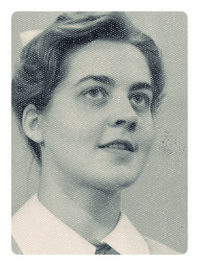
The Author (Goodreads): [Jennifer] Worth, born Jennifer Lee while her parents were on holiday in Clacton-on-Sea, Essex, was raised in Amersham, Buckinghamshire. After leaving school at the age of 14, she learned shorthand and typing and became the secretary to the head of Dr Challoner’s Grammar School. She then trained as a nurse at the Royal Berkshire Hospital, Reading, and moved to London to receive training to become a midwife.
Lee was hired as a staff nurse at the London Hospital in Whitechapel in the early 1950s. With the Sisters of St John the Divine, an Anglican community of nuns, she worked to aid the poor. She was then a ward sister at the Elizabeth Garrett Anderson Hospital in Bloomsbury, and later at the Marie Curie Hospital in Hampstead.
She married the artist Philip Worth in 1963, and they had two daughters.
Worth retired from nursing in 1973 to pursue her musical interests. In 1974, she received a licentiate of the London College of Music, where she taught piano and singing. She obtained a fellowship in 1984. She performed as a soloist and with choirs throughout Britain and Europe.
She later began writing, and her first volume of memoirs, ‘Call the Midwife’, was published in 2002. The book became a bestseller when it was reissued in 2007. ‘Shadows of the Workhouse’ (2005; reissued 2008) and ‘Farewell to the East End’ (2009) also became bestsellers. The trilogy sold almost a million copies in the UK alone. In a fourth volume of memoirs ‘In the Midst of Life’, published in 2010, Worth reflects on her later experiences caring for the terminally ill.
Worth was highly critical of Mike Leigh’s 2004 film Vera Drake, for depicting the consequences of illegal abortions unrealistically. She argued that the method shown in the movie, far from being fairly quick and painless, was in fact almost invariably fatal to the mother.
Worth died on 31 May 2011, having been diagnosed with cancer of the oesophagus earlier in the year.
A television series, Call the Midwife, based on her books, began broadcasting on BBC One on 15 January 2012.
The Narrator: Nicola Barber is an Audie Award-winning narrator whose voice can be heard in television and radio commercials and popular video games such as World of Warcraft. Nicola is also an Audie nominee in the Solo Female Narration category for her work on Murphy’s Law by Rhys Bowen and Call the Midwife by Jennifer Worth. –This text refers to the audioCD edition.






















 Rosepoint Publishing