

#1 Best Seller in Historical British & Irish Literature
Rosepoint Rating: Five Stars 
Book Blurb:
As storm clouds of war gather over Europe, Grace Fitzgerald in Ireland and Richard Lewis in the United States find their lives irrevocably altered by the looming conflict.
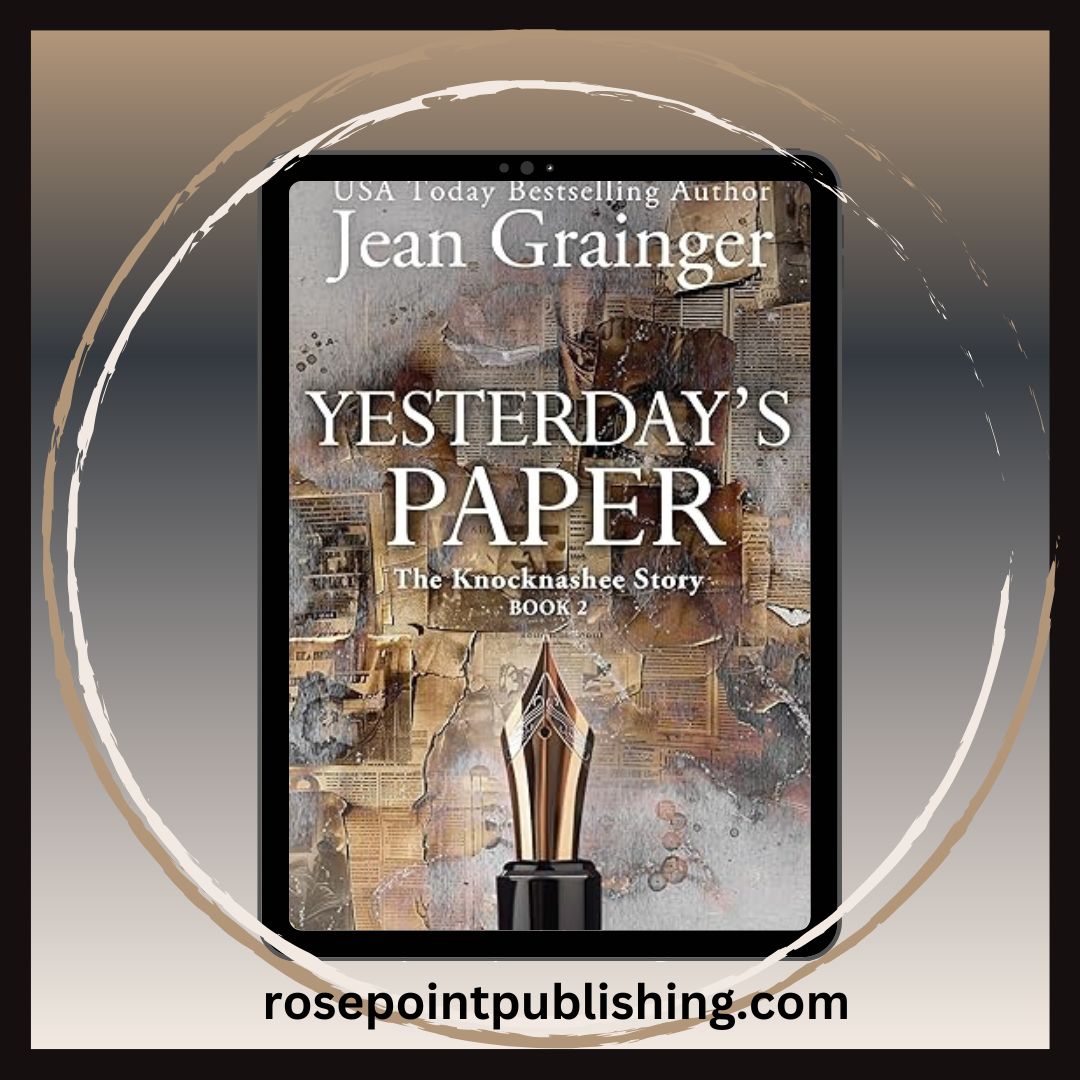
Ireland’s neutrality offers little shelter from the war’s far-reaching impact, and across the Atlantic, Richard witnesses a nation divided on intervention. Meanwhile, in sleepy Knocknashee, a twelve-year-old mystery surrounding a stolen child resurfaces, shattering long-held beliefs.
Fate seems determined to keep Grace and Richard apart, thwarting their plans to meet, and the vast Atlantic is not the only thing separating them. From the gentle green hills of Ireland, to the busy newspaper rooms of New York, from a London bracing for war to a Paris on the brink of invasion, “Yesterday’s Paper” continues the sweeping saga of Grace and Richard as they navigate love, loss, and the turbulent tides of history.
In this gripping tale of resilience and romance, the personal and the political collide, weaving an unforgettable tapestry of lives caught in the crosswinds of a world at war.
My Review:
Totally caught up in the story of Grace Fitzgerald, school teacher and now headmistress of Knocknashee, Cork County, Ireland, and Richard Lewis of Savannah, Georgia, USA, I couldn’t wait for installment two of the series and this doesn’t disappoint.
From Lilac Ink we learned Richard is the privileged son of a wealthy Savannah family, expected to follow in his father’s footsteps and instead would prefer becoming a journalist. His best friend Jacob Nunez is an aspiring photographer and together they have been scheming on a way to get to Europe to write stories and submit pictures for the home papers regarding Hitler’s growing intrusion into “neutral” countries.
Richard had become a pen pal of Grace, when in a fit of despair with her despicable sister Agnes, wrote her frustrations about the situation and enclosed it into a bottle which, thrust into the ocean, found its way to Georgia where Richard found it. He finds a way to bend the story to his political purposes and gains an editor who sends both he and Jacob to Europe.
 Grace had hoped she and Richard could meet in America when she accompanied Declan to New York, but they were two ships that passed in the night.
The author always manages to weave complex stories into her plots with multiple layers of interest and well-developed characters. Declan’s possible connection to family in America, meeting pen pal Richard, and the advance of Hitler and the entry to WWII are part of a focus brought forward from book one. A lot of research into the position of both countries, the growing fear of the people of Europe, and the stark differences in the lives of the people in both countries as well as the tension-filled atmosphere of France keep the reader flipping pages.
Will Grace and Richard ever meet up? Will Richard and Jacob make it home safely in the massive exodus of the Jewish community? What will happen to that piece of baggage left with them on the train in their escape from Paris?
After the death of Agnes and her indoctrination of Grace, can Grace ever come to peace with her appearance, put the onus of her gimpy polio leg behind her, and accept the advances of her newly recognized male suitors?
I received a complimentary review copy of this book from the author that in no way influenced this review. These are my honest thoughts.

Book Details:
Genre: Friendship Fiction, Historical British & Irish Literature, Historical Irish Fiction
ISBN:1915790778
ASIN: B0D27P1Y46
Print Length: 296 pages
Publication Date: November 10, 2024 Just released!
Source: Author
Title Link(s):
Amazon-US | Amazon-UK
 The Author: Jean Grainger is a USA Today bestselling author of historical fiction, acclaimed for her authentic portrayal of Irish life and history. Born in Cork, she draws from her experience as a history lecturer, teacher, and tour guide to craft engaging narratives. Grainger’s works span multiple series and standalone novels, covering significant periods in Irish history, including World War I, the 1916 Easter Rising, World War II, and the mid-20th century. Her stories often intertwine historical events with personal journeys, exploring themes of family, friendship, and human resilience. Grainger’s writing style, characterized by its warmth and authenticity, has earned her comparisons to renowned Irish authors like Maeve Binchy. Her dedication to research and character development has resulted in a loyal readership who feel deeply connected to her stories and characters.
©2024 V Williams


 Rosepoint Publishing