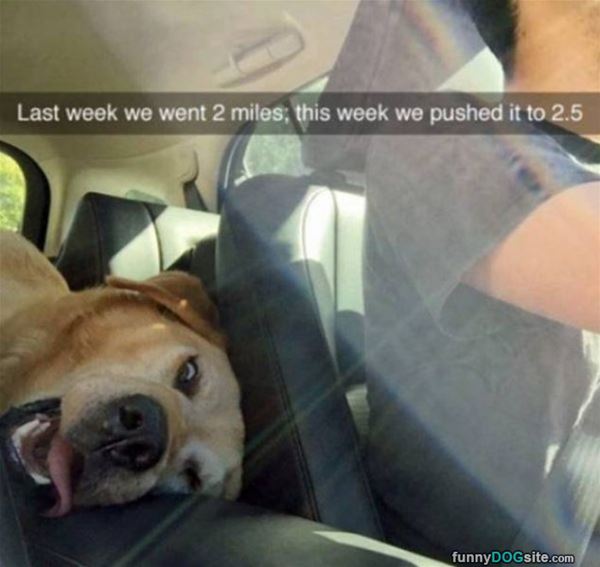
I love cutesy animal pictures and have been known to post them before; especially dog pictures.
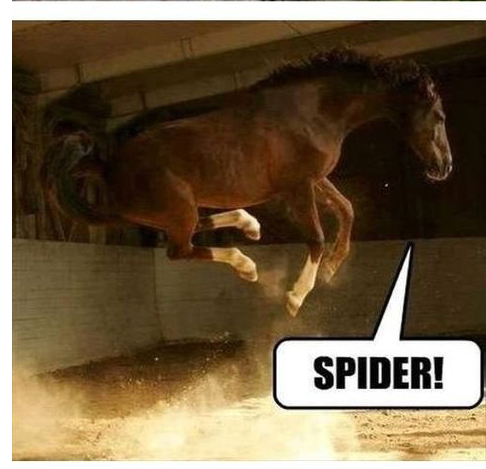
Well, dog and horse pictures.
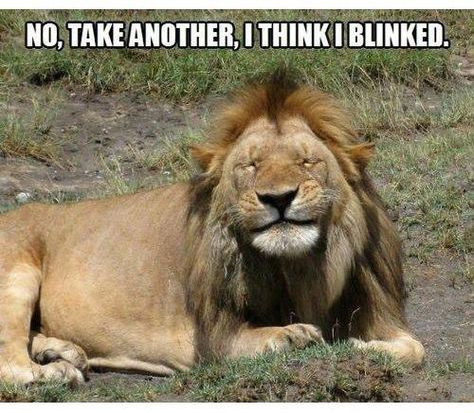
But then these two came across the internet and I couldn’t resist downloading them to post for my Freaky Friday Feature this week. It’s Friday! Another work week is over. It’s time to relax and have chips, chuckle, and a drinky–poo drinkie-poo.
Okay, the lion isn’t really a kitty, but if you have a really cute one of your favorite feline, I promise equal time. Send it to me and I’ll post!
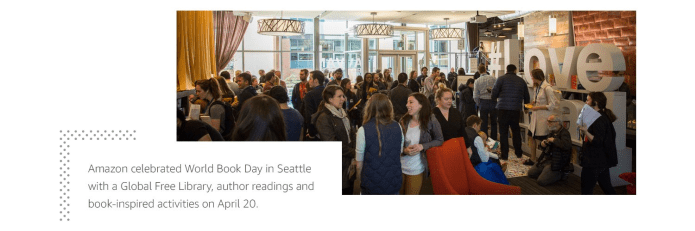
This year, World Book Day is being observed on Sunday, April 23rd. Amazon Kindle Prime has a beautiful landing page, commemorating the day with pictures and an invitation to join in the global celebration of “reading, authors, and books.” On April 20th, Seattle promoted a “Global Free Library, author readings, and book inspired activities.”
This is truly a global event; however, the UK and Ireland seem to take it one step further by providing World Book Day costumes for children.
Originally organized by UNESCO on April 23rd, 1995, the annual event primarily promotes reading and publishing. Of course, there is a strong emphasis as well on the importance of protecting copyrighted material. Last year there were 250 separate events on four continents by more than 100 countries.
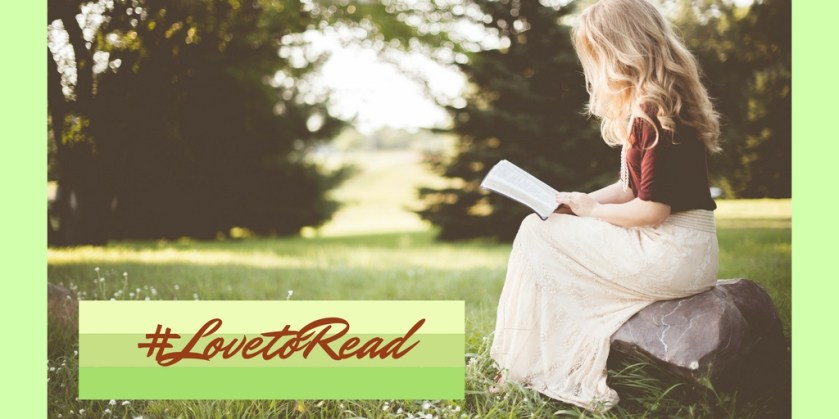
The 20th anniversary of World Book Day is celebrated by sharing why you #LovetoRead. Share your stories on Facebook, Twitter, and Instagram. It’s not too late to set up your own Goodreads Reading Challenge. (I’ve had to reduce my reading challenge to 65 books this year–I’m writing more.)
Reading empowers you through intellectual growth and activates imagination. Reading is major relaxation, a quiet moment to yourself; the ultimate stress reliever.
With so many authors looking for a change of their covers lately, I’ve looked at my own and wondered if they should be updated as well. For the most part, I was satisfied with them, and I know that a good cover helps sell. But are these book covers eye-catching; do they invite closer inspection of the book?Continue reading “Premade Book Covers–Your Design on Tap”
Very interesting question recently on Quora regarding SEO and a new term I hadn’t previously seen discussed. Black Hat and White SEO.
As I’m sure you know, SEO is short for Search Engine Optimization. Google seems to control guidelines and rules for SEO as the Oxford Dictionaries do for the comma. I read any snippets of information on SEO I can as I want to be cognizant of any hints and ideas that might help in Google algorithms–they control what you see–or how deeply you have to dig to find what I’ve written. Continue reading “What is Black Hat and White SEO–Recent Question on Quora”
I have been following Joynell Schultz for some time and watching with interest her progress as she decided on her book cover, published her first book, and proceeded to market and promote that book while beginning on her next. Joynell writes “speculative fiction,” a genre of which I had not previously been aware. In the meantime, she has been posting on her blog the details of her path to progress, including one of her latest blog series, “1,000 True Fans.” I’ve been amazed at the speed her blog has grown. Joynell lives in Wisconsin with her family and is a veterinary pharmacist. She enjoys nature, cycling, running, hiking, and travel–when she isn’t writing. She released her second book in early April and went on a heavily targeted plan to promote. She never fails to educate. Enjoy!
I have my new novel, Blood & Holy Water, set to launch thisweek. I’ve done a pile of reading, listened to as many podcasts and webinars as I could find, and spoke with other indie authors on successful techniques.
As I’ve mentioned in past posts, just hitting the “publish” button does not bring in sales for a novel. It takes some work (and, perhaps, some magic.)
I know I don’t have the secret formula here, but here’s how I lined up my release.
Pre-Launch:
Built up my email list / mailing list. I began my push in January, with a real focus in February. Now, I’m up to nearly 1500 subscribers. (You can see how I did this in my 1000 “True” Fans Blog Series.) I’ll email this list during my launch and cross my fingers for some…
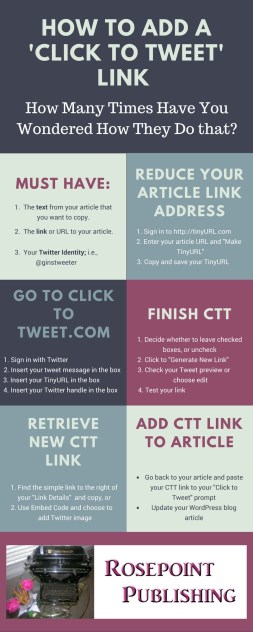
Mea culpa, and by the way, that is directly from the Oxford Dictionaries that I was so busy posting about on my blog Friday. Yes, I was trying something new, and as always with this old dog, graphic tricks don’t come easy. So apologies to all who received multiple updates as I doggedly tried again to create a “Click to Tweet” to my post. This is a free basic plan–there are paid upgrades (aren’t there always?). You’d think these things would be easier than they are, but apparently everything has to be tantamount to learning Photoshop. I seem to be the last one to figure these things out–or maybe not–if you haven’t tried it lately, perhaps this could help?
Just in case you could use a short Infographic on the whole Click to Tweet thing, I created this one and hope that it helps sufficiently that you will try it, if you aren’t indeed way ahead of me already. Click to Tweet
The Oxford University Press sparked a war back in 1892 that continues to this day with as many on both sides of the line protesting their side as the right one.
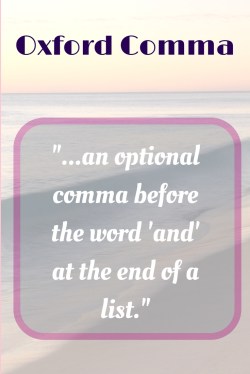
The Oxford comma (also referred to as a serial comma, or even the Harvard comma) is that “comma before the conjunction at the end of a list.” The Oxford University Press style guidelines touched off the conflict back when Horace Hart, controller of the University Press, organized a set of rules for the Oxford Press employees.
While the anti-comma faction would eliminate the second comma, the pro-comma faction would add it, sure that it provides clarity. The “pro’s” are more commonly found in the U.S. (I wouldn’t be without mine!) Only journalists forced to use the AP style generally omit it, but that was originally a bid to save space! The anti-comma people hold sovereignty in the U.K., except, of course, for Oxford University–go figure.
Why all the fuss over bell, book, and candle? Aren’t we invoking the Oxford comma for purposes of clarity? Click to Tweet
And doesn’t that really promote consistency of comma use? Apparently not in some scholars eyes. The article by Warren Clement to The Globe and Mail noted this example: “She invited her father, a tuba player and several ballerinas. It is clear that she invited her father, the musician and the ballerinas.(?Is it?) Now insert the Oxford comma: She invited her father, a tuba player, and several ballerinas. Suddenly the father has become a tuba player.” (Really?)
Hmmm…You say to-may-to and I say to-mah-to…
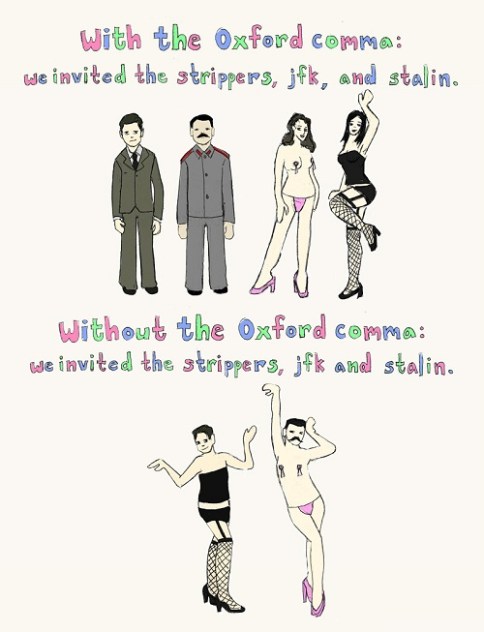
And we’ve been at this 125 years? So I’ll submit to you one final argument illustrated in riveting detail that you may or may not have seen before: “We invited the strippers, JFK, and Stalin.” I rest my case.
What is it that attracts us to sunken ships? Whether treasure ships or WW2, the fascination seems endless and demands a search. If found; explored.
What happened to the ship and it’s crew? Was it a battle? Was it a hurricane like the one in which the Marguerite went down?
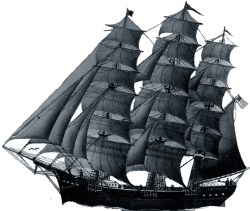
My grandfather, son of the captain, was first officer abroad the Marguerite about to cross the equator “some ten of fifteen miles west of Lagos,” (aka the gold, ivory, and slave coast) on a starboard tack when a typhoon struck the ship and she down, stern first. My grandfather always classified the Marguerite as carrying general cargo. No treasure there–we think! Continue reading “Exploration of Sunken (Treasure) Ships”


 The 20th anniversary of World Book Day is celebrated by sharing why you #LovetoRead. Share your stories on Facebook, Twitter, and Instagram. It’s not too late to set up your own




 What is it that attracts us to sunken ships? Whether treasure ships or WW2, the fascination seems endless and demands a search. If found; explored.
 My grandfather, son of the captain, was first officer abroad the Marguerite about to cross the equator “some ten of fifteen miles west of Lagos,” (aka the gold, ivory, and slave coast) on a starboard tack when a typhoon struck the ship and she down, stern first. My grandfather always classified the Marguerite as carrying general cargo. No treasure there–we think!
  Rosepoint Publishing