


Indigenous Wisdom, Scientific Knowledge and the Teachings of Plants
 in Native American Demographic Studies
Book Blurb:
As a botanist and professor of plant ecology, Robin Wall Kimmerer has spent a career learning how to ask questions of nature using the tools of science. As a Potawatomi woman, she learned from elders, family, and history that the Potawatomi, as well as a majority of other cultures indigenous to this land, consider plants and animals to be our oldest teachers.
In Braiding Sweetgrass, Kimmerer brings these two lenses of knowing together to reveal what it means to see humans as “the younger brothers of creation”. As she explores these themes, she circles toward a central argument: The awakening of a wider ecological consciousness requires the acknowledgement and celebration of our reciprocal relationship with the world. Once we begin to listen for the languages of other beings, we can begin to understand the innumerable life-giving gifts the world provides us and learn to offer our thanks, our care, and our own gifts in return.
My Review:
Okay, another non-fiction for the year, but one beautifully and eloquently told by an esteemed professor. As a botanist and daughter of indigenous peoples, her heart and mind are very closely associated with the earth and all her gifts. Indeed, a central theme of the book is reciprocity, second only to gratitude, in which much time and celebration is given to Mother Earth and her abundant gifts acknowledged.
Beautifully written, filled with prose, the novel reflects her deeply rooted love of nature and the tools mankind uses and/or continues to overlook or squander.
So many interesting chapters, so much to learn, so many mysteries exposed in a book that carefully folds together the science and spirit of how and why everything we see has a reason.
 I’ve often heard the old adage that a natural remedy is often and miraculously found near a poisonous one. I was told to beware of the poison ivy in my fairy garden, but I don’t have any Jewelweed down there, nor have I been in contact with the nasty ivy.
I loved the chapter on the “Three Sisters”, the combination of beans, squash, and corn, but really that is just one example of symbiotic plants and a whole study in itself. I also loved learning all about the maple trees of the Great Lakes region as we are still fairly new to the area and so much to learn. The cycle of the trees is a fascination as well.
Of course, the indigenous sensibilities permeate throughout the book, adding an aesthetic or ethereal quality to the prose. If there was some duplication or overly extended explanation of something that might have been mentioned before, that was okay with me. At my age, it doesn’t hurt to hear or read it more than once.
The author narrated the audiobook and, I thought, did a lovely job of it. I downloaded a copy of this audiobook from my local well-stocked library. These are my own opinions.
Rosepoint Publishing: Four point Five Stars 
Book Details:
Genre: Indigenous Demographic Studies, Native American Demographic Studies, Botany & Plants
Publisher: Tantor Audio
ASIN: B01H4772CU
Listening Length: 16 hrs 44 mins
Narrator: Robin Wall Kimmerer
Publication Date: December 27, 2015
Source: Local Library (Audiobook Selections)
Title Link: Braiding Sweetgrass [Amazon]

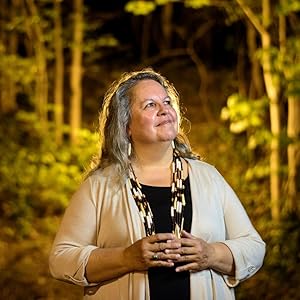 The Author: Robin Wall Kimmerer is a mother, scientist, decorated professor, and enrolled member of the Citizen Potawatomi Nation. She is the author of the New York Times bestselling collection of essays Braiding Sweetgrass: Indigenous Wisdom, Scientific Knowledge and the Teachings of Plants as well as Gathering Moss: A Natural and Cultural History of Mosses. Kimmerer is a 2022 MacArthur Fellow. She lives in Syracuse, New York, where she is a SUNY Distinguished Teaching Professor of Environmental Biology, and the founder and director of the Center for Native Peoples and the Environment. [Amazon]
As a botanist, Robin Wall Kimmerer has been trained to ask questions of nature with the tools of science. As a member of the Citizen Potawatomi Nation, she embraces the notion that plants and animals are our oldest teachers. In Braiding Sweetgrass, Kimmerer brings these lenses of knowledge together to show that the awakening of a wider ecological consciousness requires the acknowledgment and celebration of our reciprocal relationship with the rest of the living world. For only when we can hear the languages of other beings are we capable of understanding the generosity of the earth, and learning to give our own gifts in return. [Goodreads]
©2024 V Williams

 Best Books of the Year 2023 – (The #1 TV show on Netflix) (Kindle)



 Award nominee (Kindle)



















 Finally, the trees are blooming and the tulips and other bulbs have bloomed. Haven’t had a freeze for several nights, but as we’ve been taught, that can turn on a dime.
 Still, in my usual early spring exuberance, I started the seeds (indoors). They usually do fine right up until I try to harden them off in preparation for transplanting. I no longer have to start tomatoes—they volunteer now like crazy. The bulbs are blooming in the back flower bed too. The fairy garden is a total winter mess and still WAY too wet to venture down there. Like my son says, not a fairy garden, it’s a swamp. And the squirrel war? I’m losing.


 Have you noticed this little zinger when you open your Kindle app lately? The challenge, in case you needed another, lists days read, books completed (broken into categories), and mysteries (also broken into categories). I achieved “Voyager.” But there’s more… I just achieved a “Perfect Month” a one-month streak. This was something that I was apparently volunteered for in 2021 and never noticed. Not sure what that’s going to achieve. Maybe an attagirl/boy? Have you noticed it before?
 They’ve been at me for some time to graduate to the “new and improved” or better yet—something I’ll have to pay for–email. Not choosing to do either, the new email as it comes out no longer works on my cell phone leaving my blog posts looking like Twiggy. I mean, really? This was a banner on my computer screen. The pics are ruined and the text is plain. Who wants to open that?
 Rosepoint Publishing