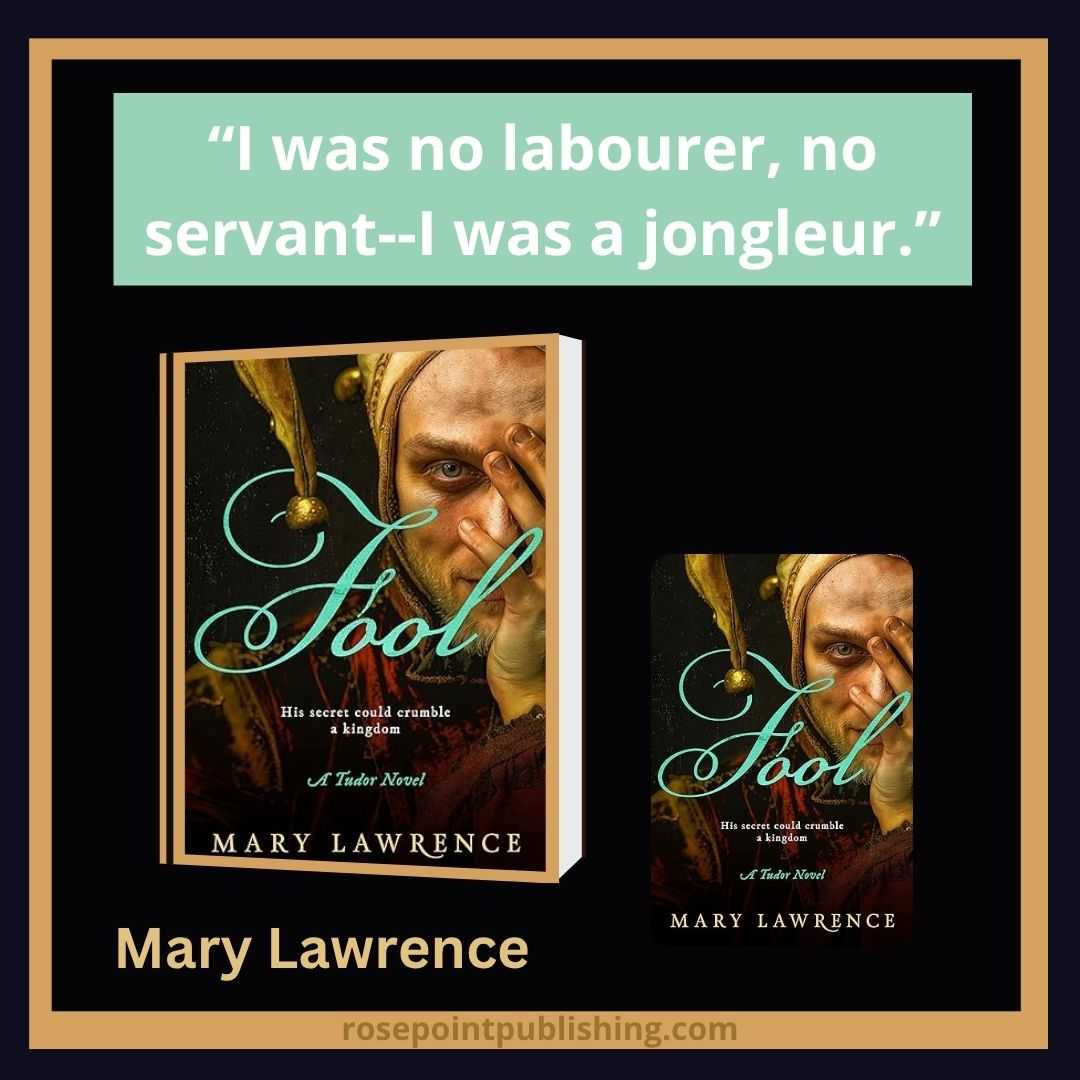
A Tudor Jester’s Reckoning in the Court of King Henry VIII
Rosepoint Rating: Five Stars 
Book Blurb:
Betrayal. Power. Perception. The most dangerous mind at court belongs to a fool.
From the author of The Alchemist’s Daughter comes a dark tale of ambition and survival.
“One of the most vibrant characters I’ve encountered in years.”–Goodreads Ecostell
Kronos is a fool–mocked for his dwarfism, prized for his juggling, and underestimated by everyone who matters. But in a court ruled by paranoia and whispers, invisibility is its own kind of power.
When Kronos overhears a secret that could destroy Queen Katherine Howard, he becomes a liability the crown cannot afford. Silenced, mutilated, and left for dead, he survives–barely.
Rescued by an ambitious apothecary, Kronos soon realizes he has not escaped danger–he has merely changed masters. His secret is worth a fortune…and powerful men are willing to kill to control it.
But Kronos has spent his life being overlooked and he’s ready to use that to his advantage.
As rival factions circle and scheme, Kronos sets a plan in motion–one that could topple the mighty, rewrite his fate, and force his foes to reconsider which of them is truly…the fool.
Perfect for fans of C.J. Sansom and Philippa Gregory
My Review:
Why am I not surprised that a Renaissance court jester would hold my rapt attention given the master storytelling author of such period works.
It’s the chaos of the brutally waning days of King Henry VIII, watching his battle against decline in aging years and few stalwart sons to brag about as well as his machismo. His court confronts conflict between the high-born aristocratic families of the Howards and the Seymours, the women are aging beyond childbearing years, Anne was separated from her head, and Katherine looks to be the next candidate who’ll restore his manhood, quell the whispers, and the snide remarks behind his back.
It’s a book steeped in era atmospherics—the color of the common cloak better to mask the cling of mud, the smell of the sewer ditches enough to unsettle the stomach. There is meticulous historical research and accuracy, intricately interwoven with the story of the Jester. But is he a Fool?
“Leave not to the imagination what you can make real.”
Kronos was left on a dung heap as an infant—the result, no doubt, of his obvious physical deformity. Rescued by the monks at the Thetford Priory, he was raised in a cloistered environment, taught to read and write, but then relegated to assignments in the kitchen and later the infirmary, when he failed to become a novice. Along with a robust native intelligence, wit, and cunning, he also discovered he had a bawdy side. When the monks discovered that of him as well, he was booted.
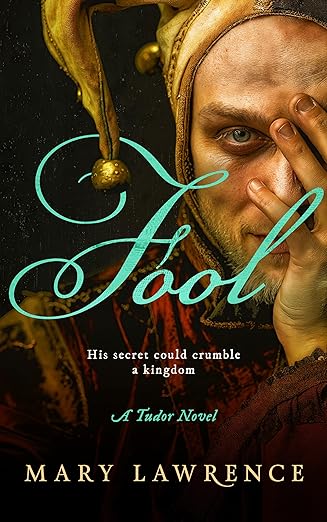 No problem! Preparing for his eventual release from the priory, he taught himself to juggle. How could he fail as the fool, the court jester, if he also had a talent? Didn’t he already have their attention just by his appearance? Unfortunately, he had another craft. Realizing early on he could be invisible, had developed a penchant for spying, eavesdropping, seeing what others did not. And he was—again—caught.
Kronos woke under the care of William and Joan Brugge, who own an apothecary and provide medicinals. They secret him away and she cares for him at the rising consternation of her husband.
While I might not be fully invested in Kronos as a main character, who could alternate between being malevolently and surprisingly benign philosophically about his dwarfism to grinning lasciviously about women, there were a number of support characters who were well developed and engaging. Joan is an amazing example of those who benevolently heal and would do no harm, while her husband provided the treacherous and traitorous antagonist.
I was reminded again that the author writes so well in the Tudor language that you are instantly transported back to the Renaissance. Loved the patois and my instant cell phone access to the words’ meaning. I always enjoy learning about natural medicinals and in this specific case, even deeper into the herbs divided by their ruling planet. I’m aware there are specific times for planting and harvesting, but was unaware it went even deeper than that.
I would happily recommend this novel to anyone who enjoys historical fiction, specifically medieval, and survival of an epoch of deceit, abuse, violence, and debauched circumstances. It was also a period of huge upheaval in the division of church and state.
Not my first experience with this author, I thoroughly enjoyed The Lost Boys of London, and I’ll always welcome a new ARC. I received this advance review copy from the author with no expectation of a review. The thoughts expressed freely here are my own.

Book Details:
Genre: Renaissance Historical Fiction, Medieval Historical Fiction
Publisher: Red Puddle Print
Publication Date: April 14, 2026 – HAPPY RELEASE DAY!
Title Link(s):
Amazon-US | Amazon-UK | Barnes & Noble
 The Author: Mary Lawrence is the author of the Bianca Goddard Mysteries. Set in Tudor London in the final years of Henry VIII’s reign, Book I, THE ALCHEMIST’S DAUGHTER is a #1 best-selling historical mystery on Amazon, and was named by Suspense Magazine a “best historical mystery” in 2015. Book 2, DEATH of an ALCHEMIST released in 2016 and Book 3, DEATH AT ST. VEDAST released in January, 2017. THE ALCHEMIST OF LOST SOULS (May 2019), won a second “Best Of 2019” by Suspense Magazine. THE LOST BOYS OF LONDON released May 2020.
Mary grew up in Indiana and lives in Maine. After a career in cytotechnology, she turned to farming. She is an avid reader of historical fiction and nonfiction and concentrates on Tudor/Elizabethan history. Her articles have appeared in several publications most notably, The Daily Beast.
Visit her at www.marylawrencebooks.com
Follow me on facebook https://www.facebook.com/marylawrence… twitter at mel59lawrence.
©2026 V Williams